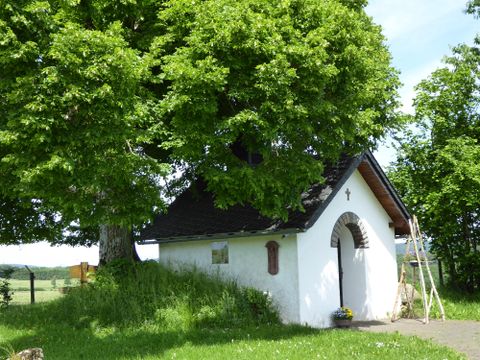
Barrier-free viewing point at the Liborius Chapel
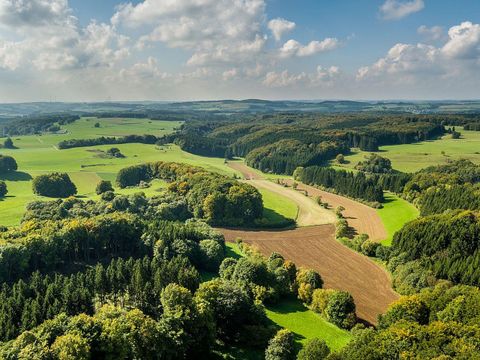
ErnzenThe barrier-free platform in front of the Liborius Chapel offers a magnificent view of the Luxembourg town of Echternach.
The barrier-free platform in front of the Liborius Chapel offers a magnificent view of the Luxembourg town of Echternach.
The Lourdes Grotto is located in the community of Beilingen. It was built in 1909 on the initiative of Mr Nikolaus Bonertz. Throughout the year the grotto is visited by many believers and pilgrims. At the beginning of october there is an annual light procession to the Lourdes Grotto. Inside and outside the grotto is covered with lava slag. Ivy, moss and trees grow all around.
If you want to see a typical Roman farm: Here it is! A modern shelter shows you its original dimensions.
Between Holsthum and Peffingen you can observe the formation of calcareous sinter.
A direct view of the natural surroundings of the southern Eifel is included.
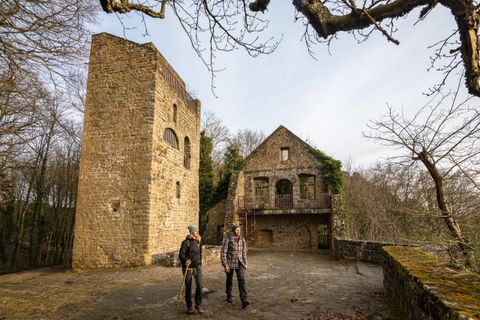
It is neither a castle as we imagine it, nor does the building have anything to do with the Vikings: The meter-high rampart of fallen stones is the remains of a millennia-old fortification on the edge of the Ferschweiler plateau.
The representative buildings of Malberg Castle contain stucco ceilings and wood paneling as well as tapestries. A painted wall covering with hunting scenes is unique.
The Genovevahöhle ( cave) is located south of Kordel in the beautiful Kyll Valley.
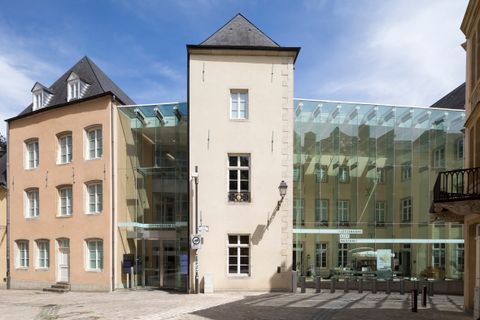
In its new building, inaugurated in 2002, and in three historic houses renovated in 2014, the National Museum of History and Art shows the national archaeological, historical and artistic collections in more than 6,000 m2. It is a key cultural attraction for those who wish to understand the history of Luxembourg through its public collections. The Museum’s prologue offers an uplifting introduction by displaying a brief history of the country and the Museum since 1839. The visitor is then invited to continue his journey along the route of his choice. There are four circuits to choose from: territorial archaeology from prehistory to the middle ages; national and international painting and sculpture from the 14th century to the present day; life in Luxembourg from the 16th century to the present day; and monetary history from antiquity to the present day. Beyond the newly outfitted permanent collections featuring the jewels of the Museum, the MNHA also regularly offers major temporary exhibitions that resonate with its own collections. Visitors can also admire works by the famous Luxembourg-born American photographer Edward Steichen.
The pedestal with the inscription and the lower part of the image relief have been preserved from the former dedication monument to the Roman goddess of the hunt from the 2nd century AD.